Most cotton ships stiff. It arrives from the mill flat, slightly papery, the dye sitting on the surface rather than in the fiber. You buy it, you wear it once, it softens a little, you wear it again, it softens more. After a year of washes it finally feels like yours.
We do that year of washing before the piece ships. Not literally — the math doesn't work — but a compressed version of it that gets a garment to about the tenth-wear softness before you ever touch it.
Garment-dyed
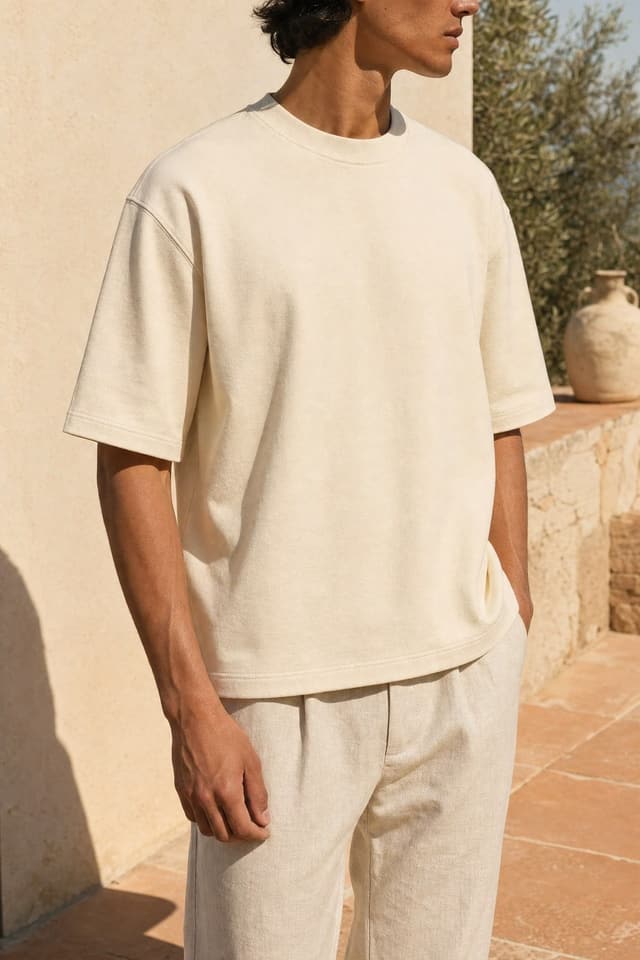
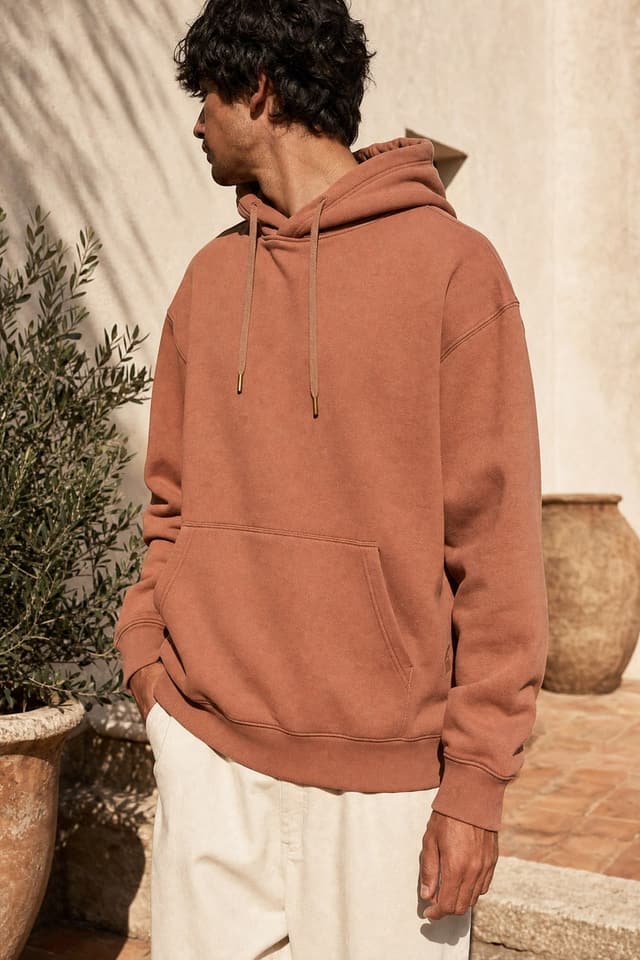
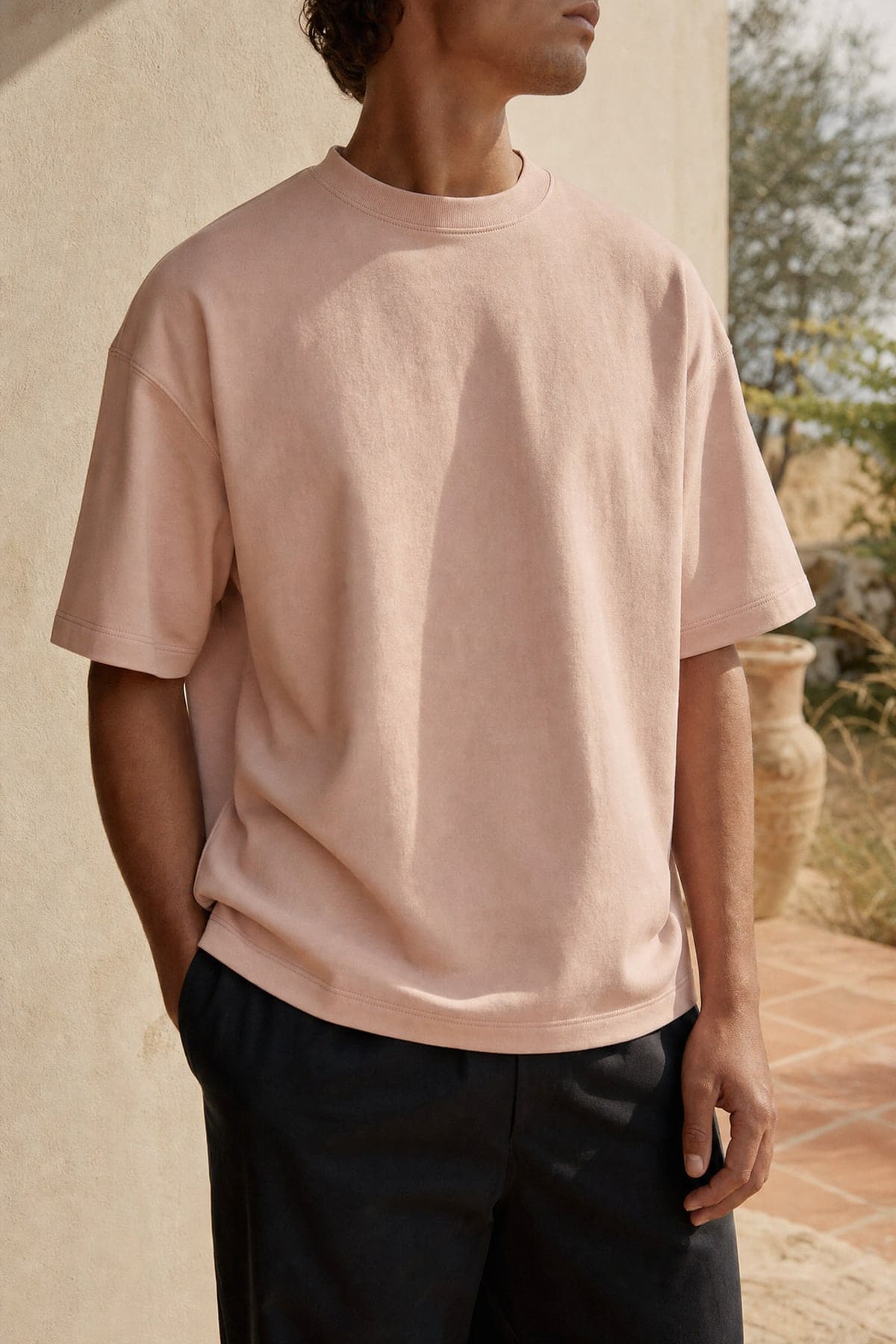
The tee and the overshirt are garment-dyed instead of yarn-dyed; the cargo is garment-washed. The pieces are sewn first, then dyed in a vat as finished garments. Color goes into every seam, every label, every thread the same. The shade settles slightly unevenly across batches — small variation we like. No two Stones are exactly the same.
Garment-dyeing also shrinks the cotton evenly. By the time it dries it's pre-shrunk where shrinkage matters — across the body, through the chest, along the inseam. The piece you receive is the piece you'll keep wearing in two years.
Enzyme-washed
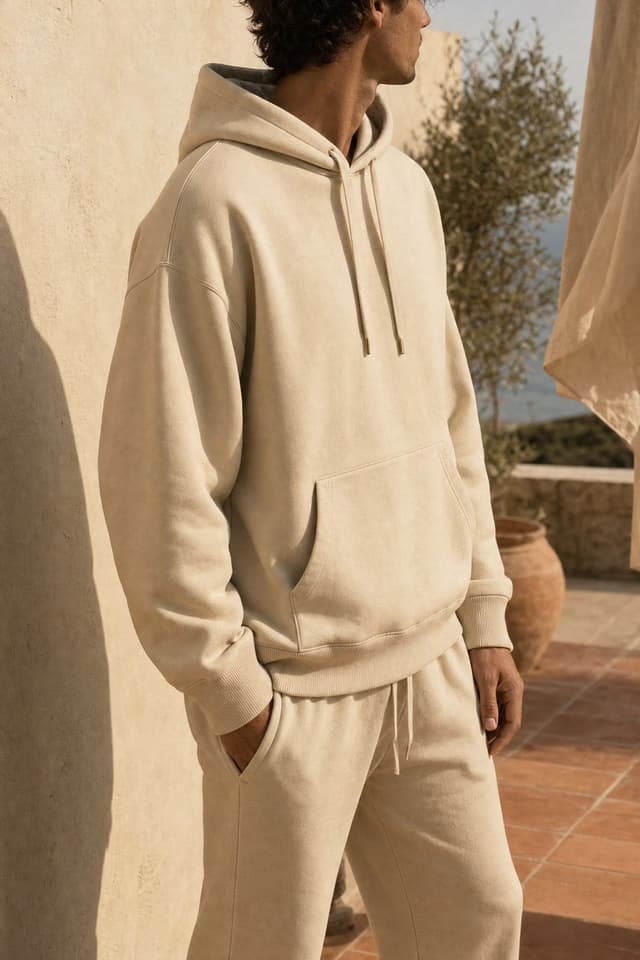
The sweats and the shorts go through an enzyme wash. Cellulase enzymes eat the loose surface fibers on cotton terry — the fuzz that makes new cotton feel slightly scratchy and look slightly opaque. After the wash the terry is smoother, the color is softer, and the pile sits flatter against the body. It's why the first wear feels like the tenth.
Washed twice
The overshirt's 12 oz cotton twill is washed twice instead of the usual once. Twill is a stiff diagonal weave — it can stand up on its own when it leaves the mill. One wash takes the starch out. The second wash relaxes the weave enough that the shoulders sit, the sleeves break naturally, and the hem doesn't fight you. Twice is the right number. Three would soften it past structure.
What you can feel
Heavy basics that don't feel heavy on the body. Cotton that drapes the way a five-year-old favorite tee drapes. Color that settles into the fabric instead of riding on top of it. Nothing crisp or cardboard about a new piece.
It's a small set of steps. They're the difference between a piece you have to break in and a piece that already feels like it's been with you a while.